June 2024 – Present
Title: Experiences of Reproductive Care and Decision-Making for Young Women with Disabilities in Newfoundland and Labrador: A Phenomenological Research-Creation Project
Funding: Social Sciences and Humanities Research Council (SSHRC) Insight Development Grant
About the Study:
Exercising autonomy in reproductive care during adolescence and early adulthood is a critical step toward building self-determination. Yet, for many young people this autonomy is often denied. Disabled young people, in particular, continue to face systemic barriers in reproductive healthcare, including culturally incompetent care, dismissal of their needs, and, in some cases, coerced or non-consensual interventions.
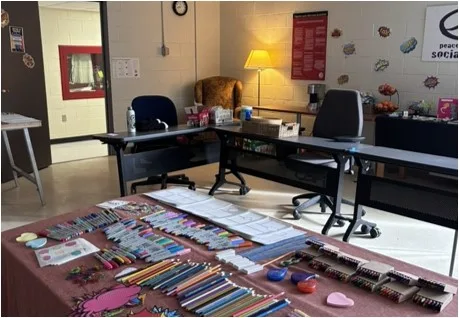
This research-creation project centres the voices of disabled young women and non-binary people aged 18 to 24 living in Newfoundland and Labrador. Through focus groups, arts-based workshops, and storytelling, participants will share their experiences accessing and navigating reproductive care services. Local comic artist, Georgia Webber, will work alongside participants to co-create a graphic novel that brings these experiences to life.
What Makes This Study Unique?
- Arts-based focus groups conducted in 2026 with 22 disabled young people aged 18–24.
- Research activities involving discussion, drawing, and visual storytelling.
- Recruitment and data collection completed for the phase we’ve discussed.
- Interpretative phenomenological analysis underway, alongside the development of the comics-based knowledge-sharing component.
Progress: Data analysis!
Research Assistants:
- Emily Howe, PhD Candidate (Marine Institute, Memorial University)
- Israt Lipa, PhD candidate (Folklore, Memorial University)
- Claire O’Brien, MPH
- Sara Martinez Rueda, (Psychology, Universidad Autónoma de Bucaramanga)
- Jasmine Carey, Youth Advisor
Publications Related to This Project
Lipa, I., Goulden, A., & Lewis, V. (2026). “I think it’s a scary topic to talk about”: A qualitative study of disabled young women’s experiences with sexual health. Women’s Reproductive Health.
Goulden, A. (2025). “A lot of social workers don’t seem to understand or realize the harm that they cause”: Disabled young people’s experiences with sexual well-being in social work practice. The British Journal of Social Work, 55(2), 644-662.
Goulden, A. (2025). “I’m worthy of having experiences just like everybody else”: Exploring sexual well-being among young disabled people. Disability & Society, 40(10), 2896-2921.
Goulden, A. (2025). “Everybody has a body, so we need to talk about sexual well-being”: Young disabled people’s suggestions for sex-positive social work practice. Child and Adolescent Social Work Journal, 42, 729-741.
Goulden, A. (2024). Young disabled people and sexual well-being. In S. Kattari (Editor), Exploring sexuality and disability: A guide for academics and health and human service professionals. Routledge.
Goulden, A. & Kattari, S. (2022). Sexual orientation, sexuality, and the disability community. In E. Slayter & L. Johnson (Editors), Social work practice and the disability community: An intersectional anti-oppressive approach. Pressbooks.
Goulden, A. (2021). A critical review of social work interventions and programs that support disabled youth with their sexual well-being. Journal of Social Work Practice, 35(4), 403-417.